The Ghosts of Gallipoli
Dardanelles, Türkiye | rEvo CCR | 28 – 82m | 2025
Turbulent seas with a turbulent past - diving the Ghosts of Gallipoli was a journey into history, and exploration my own limits.
Between the Sea of Marmara and the Aegean Sea lies the Dardanelles Strait; a narrow, strategic waterway that Allied naval forces attempted to force during the Gallipoli Campaign of World War I. Hundreds of ships, and an estimated half a million lives perished during the course of this campaign that impacted borders, governments, and politics across the Eurasian continent, altering the course of history.
These ships that perished with thousands of souls onboard aren’t just wrecks, they’re war graves, and in 2021, the Turkish government opened fourteen of these wrecks to divers, with the inauguration of the Gelibolu Historic Underwater Park.
Enormous efforts have been made by the government and its partners to make these safe to dive, not only clearing them of unexploded ordinance but also marking each of these wrecks with permanent buoys held to the sea floor with heavy chains and large concrete blocks made to withstand the turbulence of this waterway.
While I have dived in nine countries, in fresh and salt water, in raging open ocean currents, from boats and shores, I had, until then, only ever dived my rebreather in the relative calm of the Red Sea, and with a well-established operation, clear processes, and extensive surface support.
I was anxious, naturally. We were diving off a small vessel, and more than just the seas felt unfamiliar to me. I was surrounded by veterans; men who have been diving longer than I'd been alive, and I was only the unknown videographer one of a person invited to participate in a photography competition, who joined him to spend a week diving after the competition.
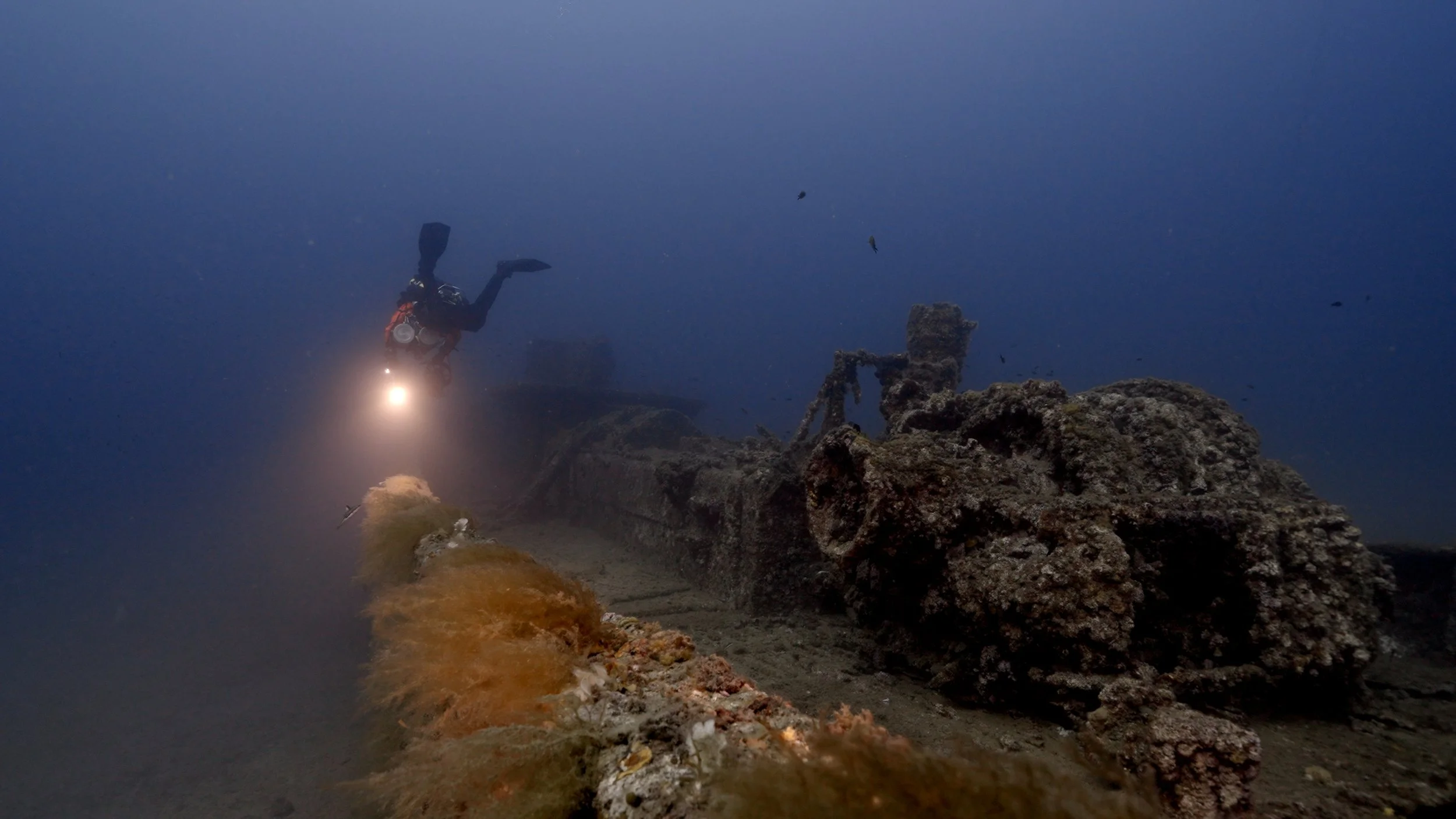
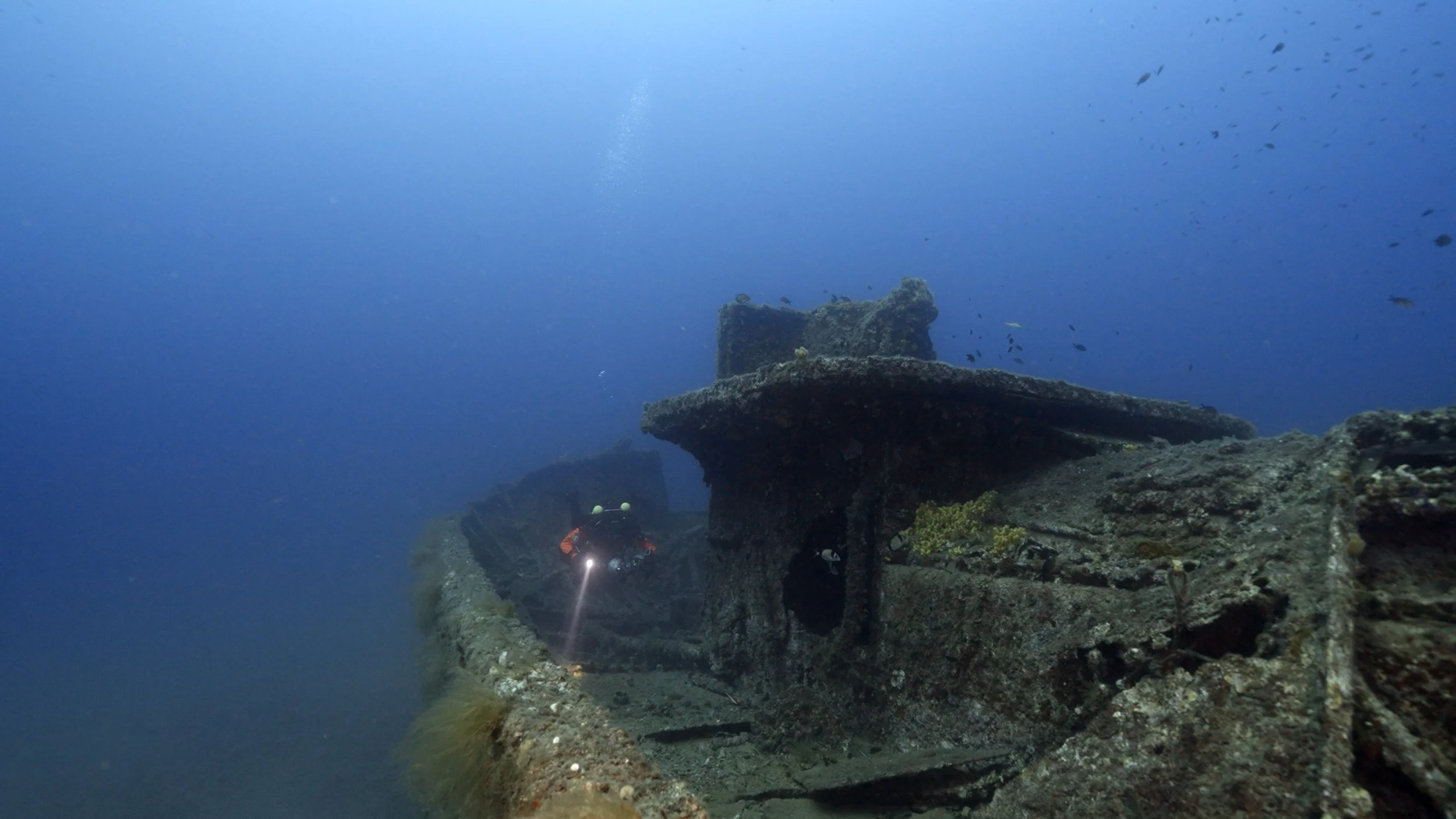
We started with the easiest of them all - HMS Lundy, a fishing vessel that had been converted to a minesweeper for the war effort. Lundy was sunk when another in her fleet struck her while attempting to flee enemy artillery fire. She lays remarkably intact and upright at a depth of only 28 metres.
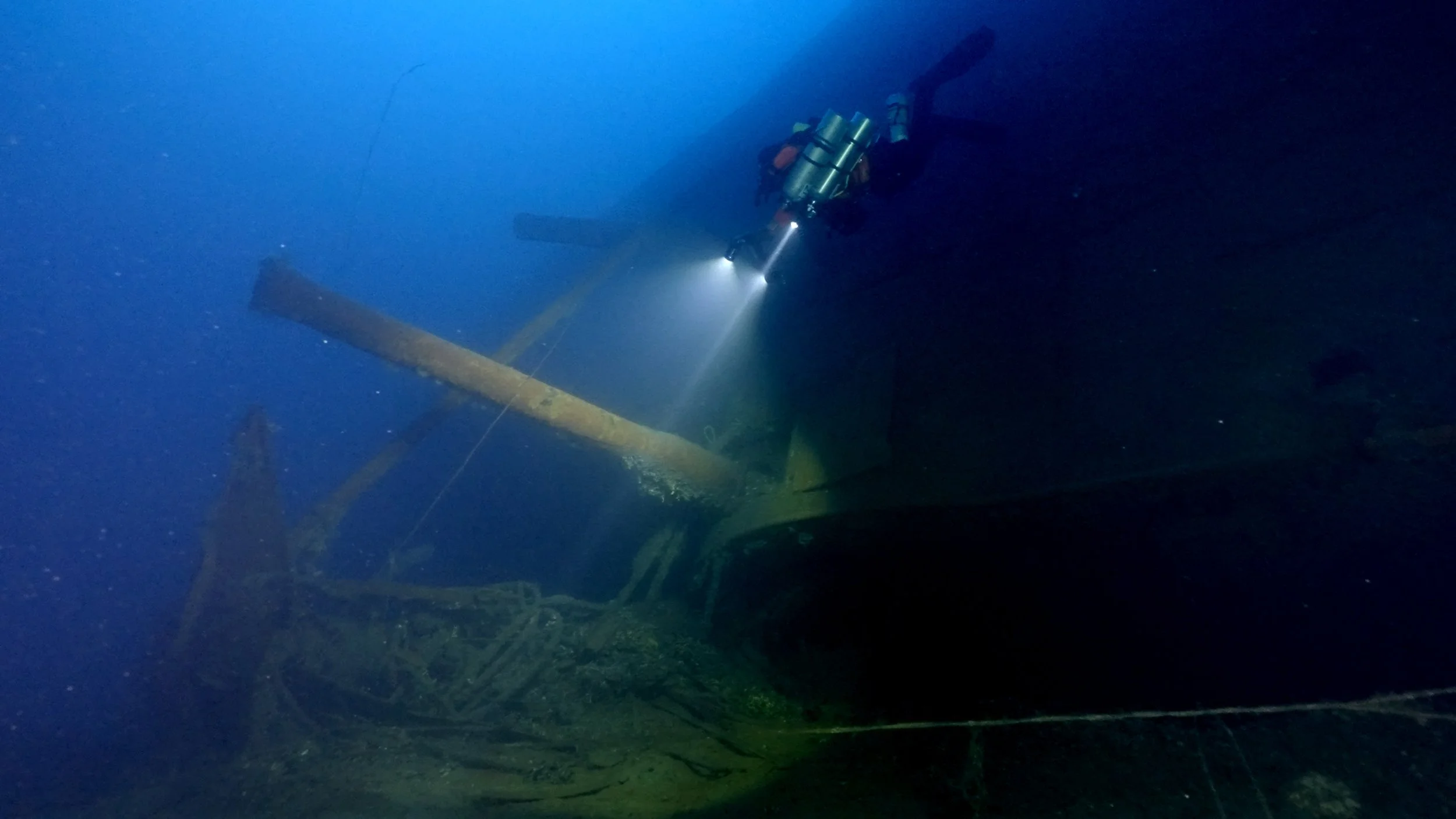
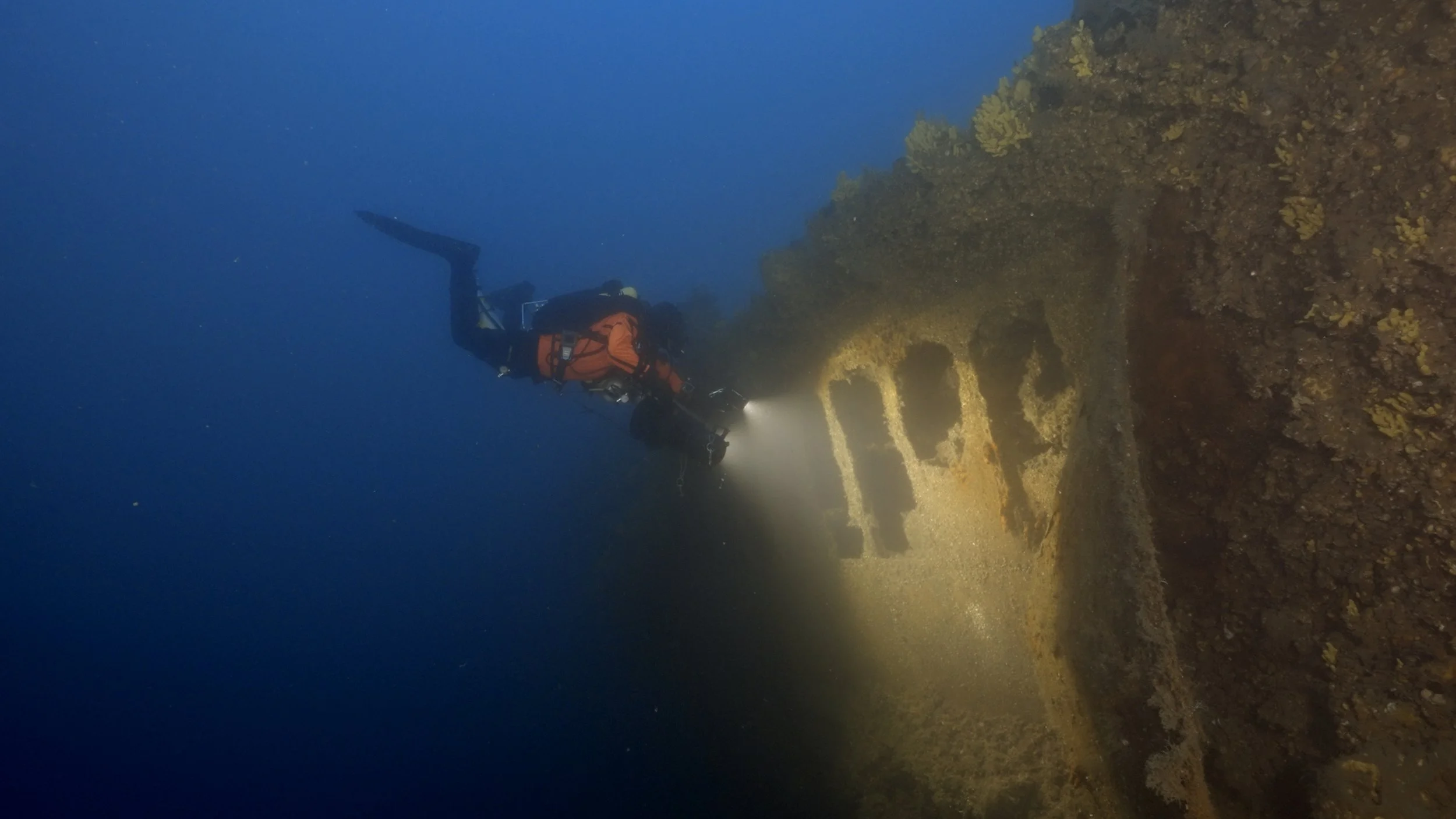
Next, was HMS Triumph; a pre-dreadnought battleship, symbolic of the power wielded by the British Navy when the war began, that succumbed to a torpedo from a German submarine: her powerful, imposing, guns helpless against the technology that defined this campaign.
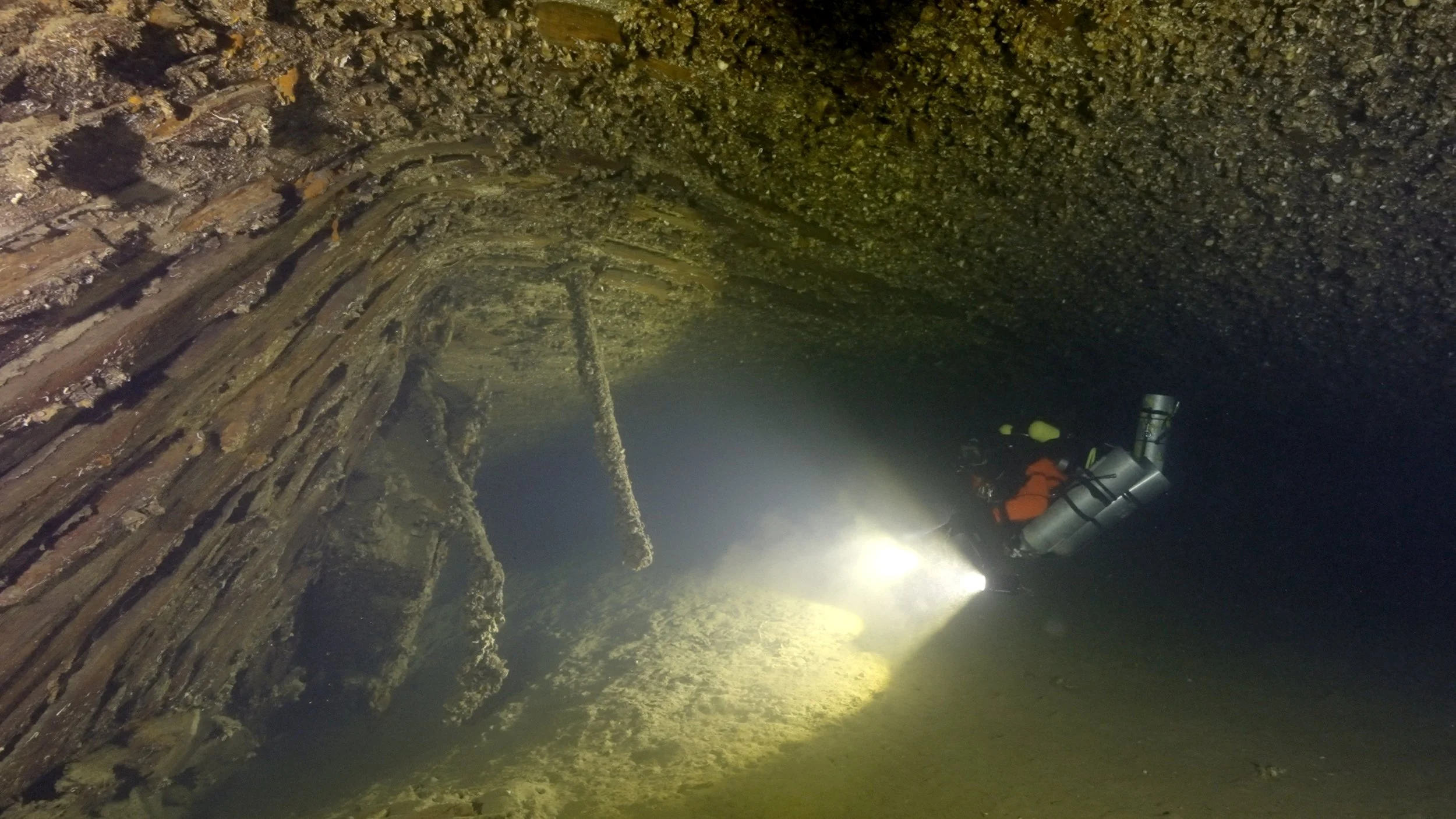
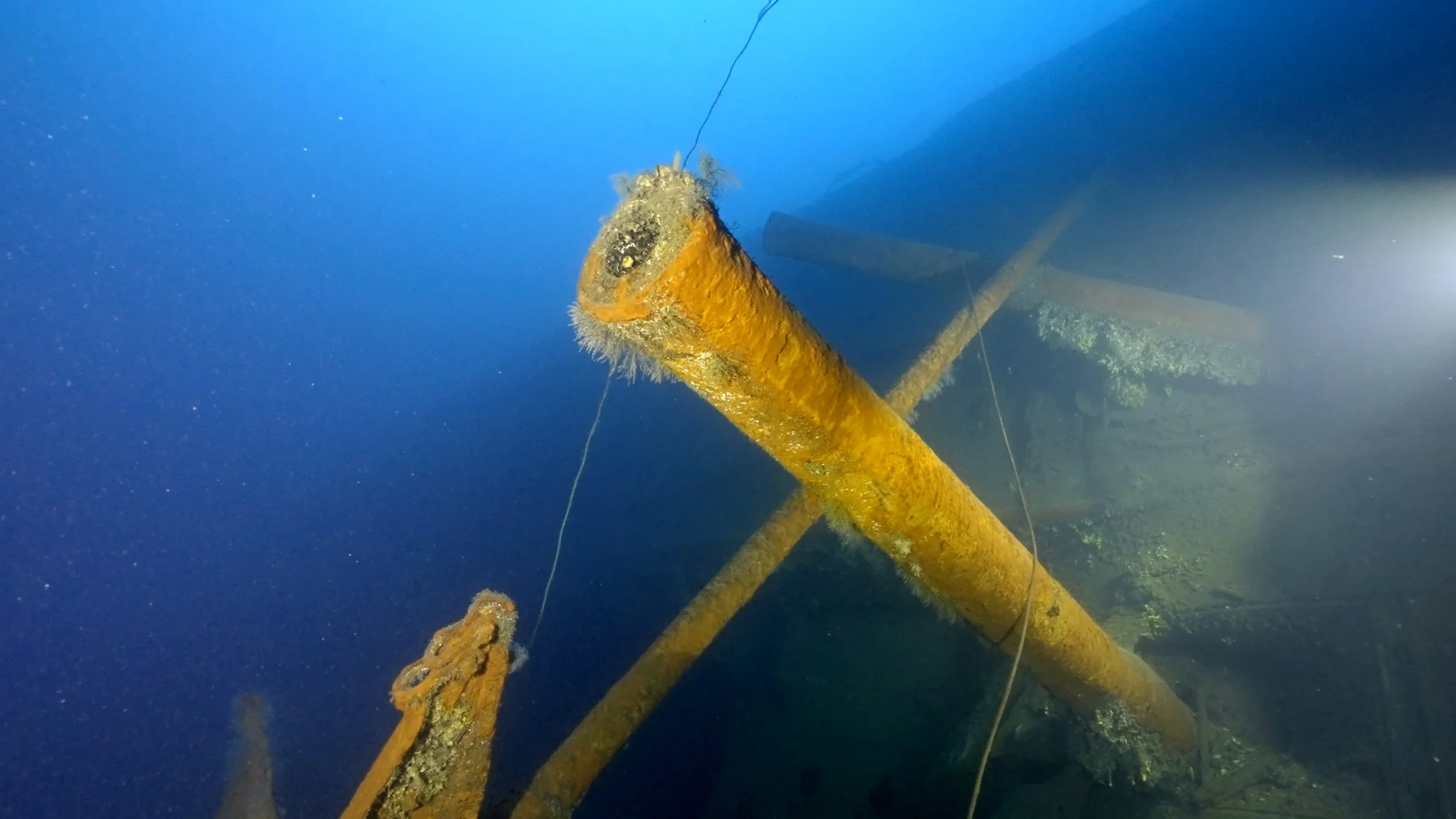
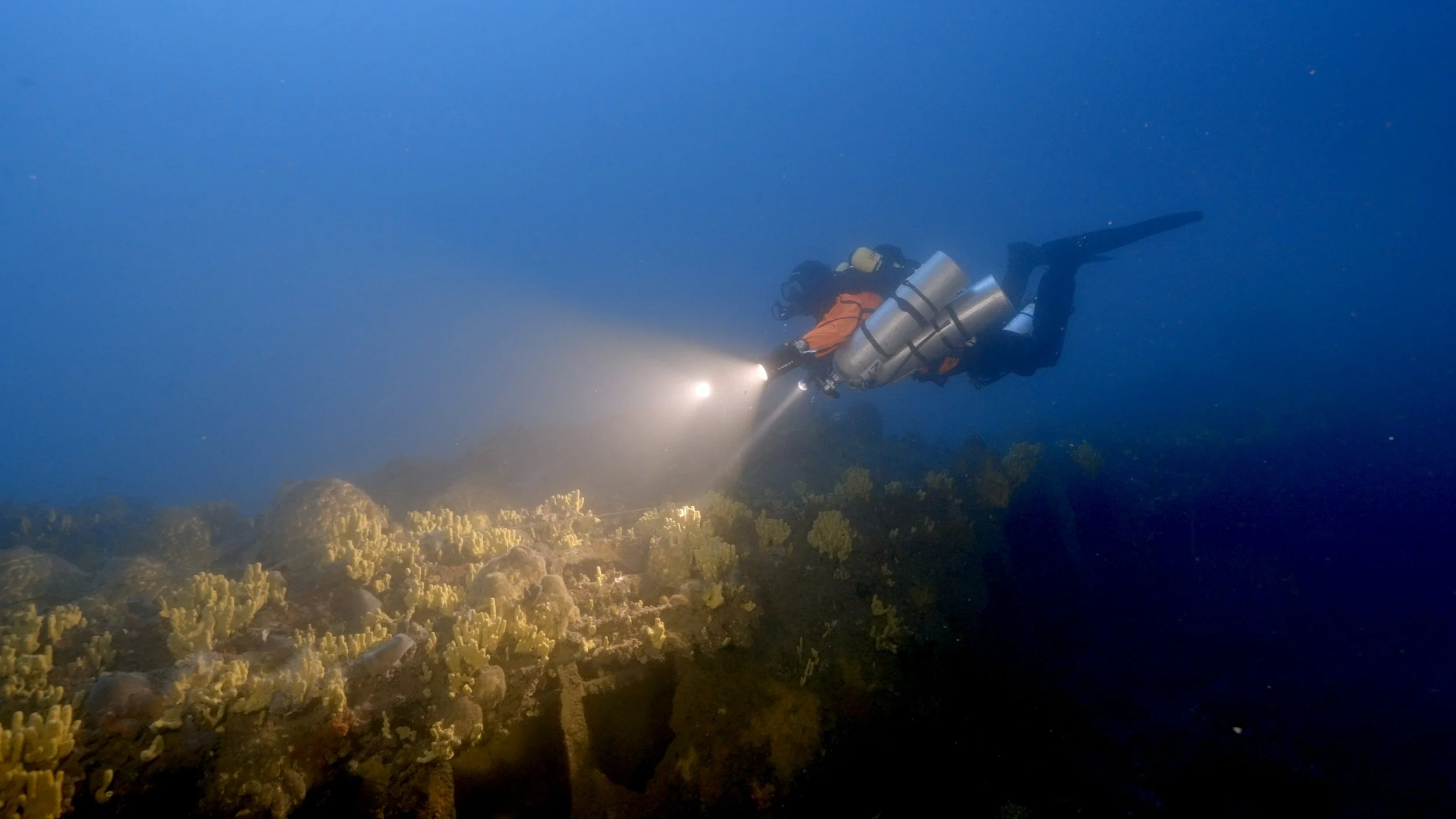
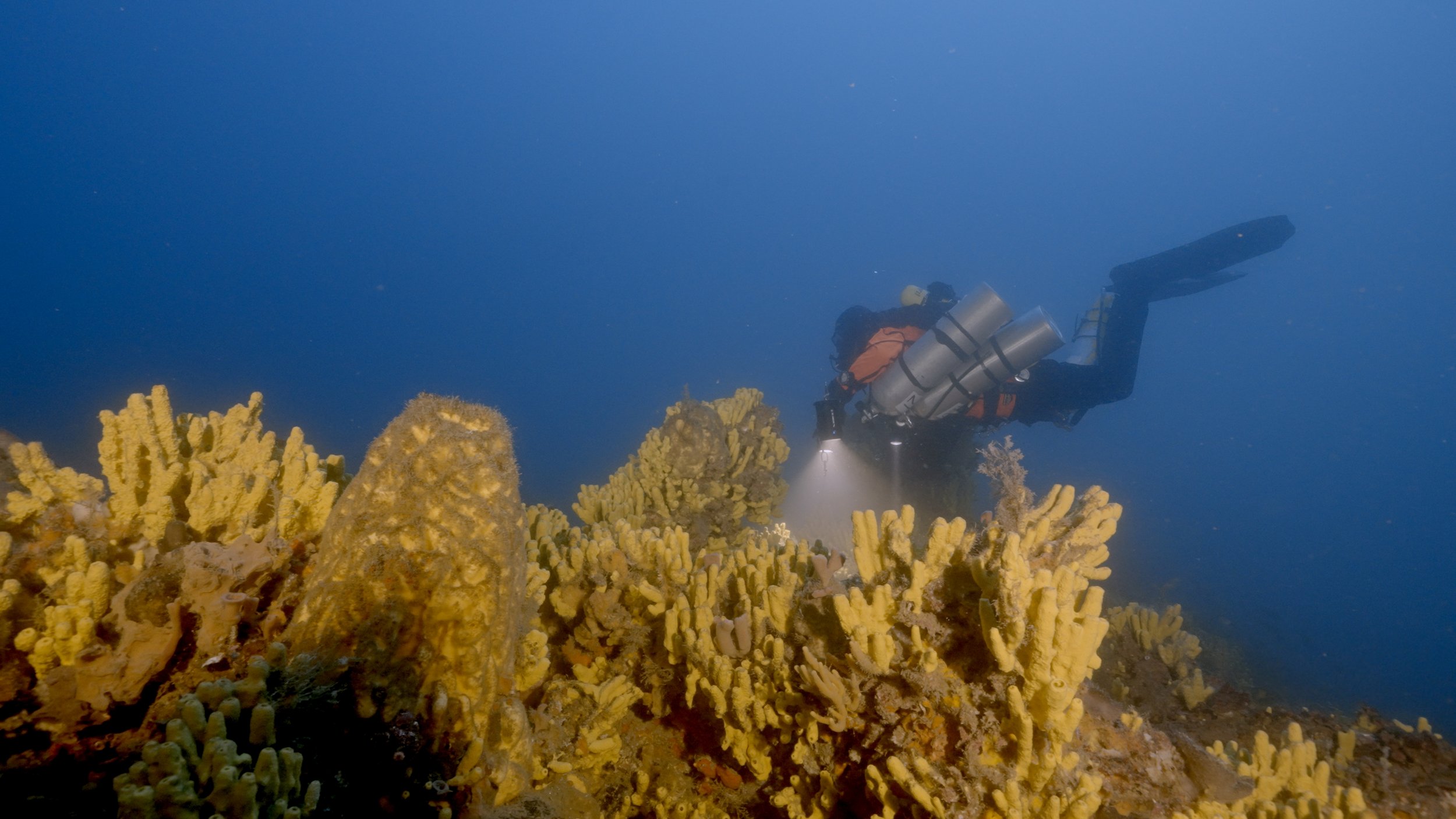
Over a century later, yellow sponges droop from her guns like molten wax in a medieval cathedral. With great damage to her hull, her insides now resemble the insides of caverns. Her lifeboats lay at 74 metres with her, a sobering reminder of what her demise cost those onboard when she sank.
The water, an already crisp 21 degrees at the surface, dropped almost ten degrees at depth. We felt the swell of the sea at 30 metres, which meant we couldn’t hold onto a line during decompression. Our dive was three and a half hours long.
I have always been a fiercely independent, unrelenting, and audacious person, and it was SS Carthage that taught me that it was alright to admit: this dive on that day, was beyond my abilities.
Technical diving is a tough space. While female technical divers exist in increasing numbers, the reality is, the gear is heavy, bulky, and it is built for people with larger, stronger bodies than most women have. On our first attempt to dive SS Carthage, we had a swift surface current. After being pulled almost 50 metres from the boat immediately upon entering the water with all my equipment, it took all the strength I had - both physical and mental - to kick, and then pull myself back to the boat, with my scooter helpless against what was dragging me away.
I was met with grace, kindness, and reassurance. Did calling the dive make me look weaker than the others on the boat? Probably. Did it leave me open to judgement and sow the seeds of doubt in my abilities? Possibly. Regardless, because of my decision, I will live to attempt this hauntingly beautiful wreck again some day.
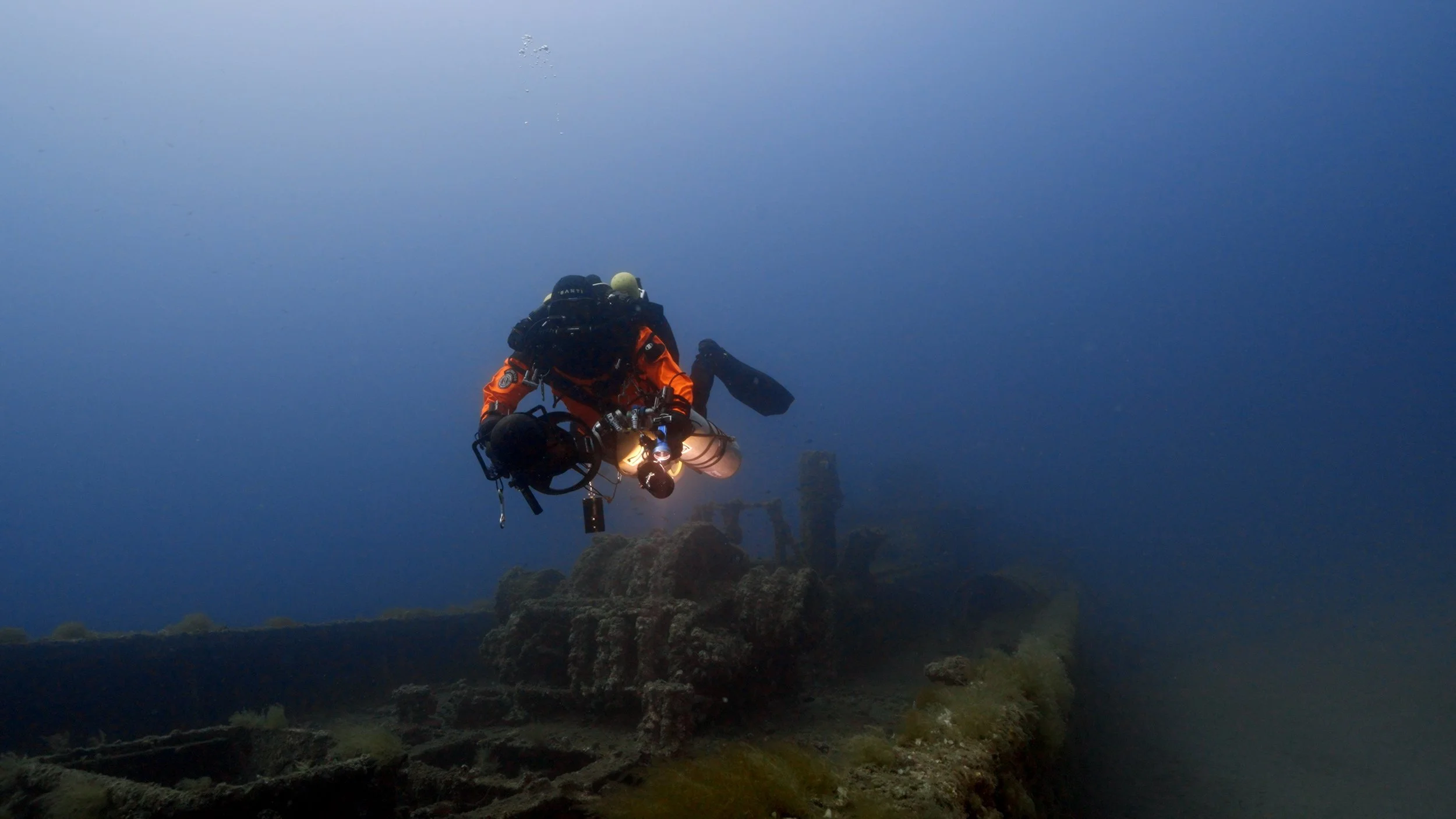
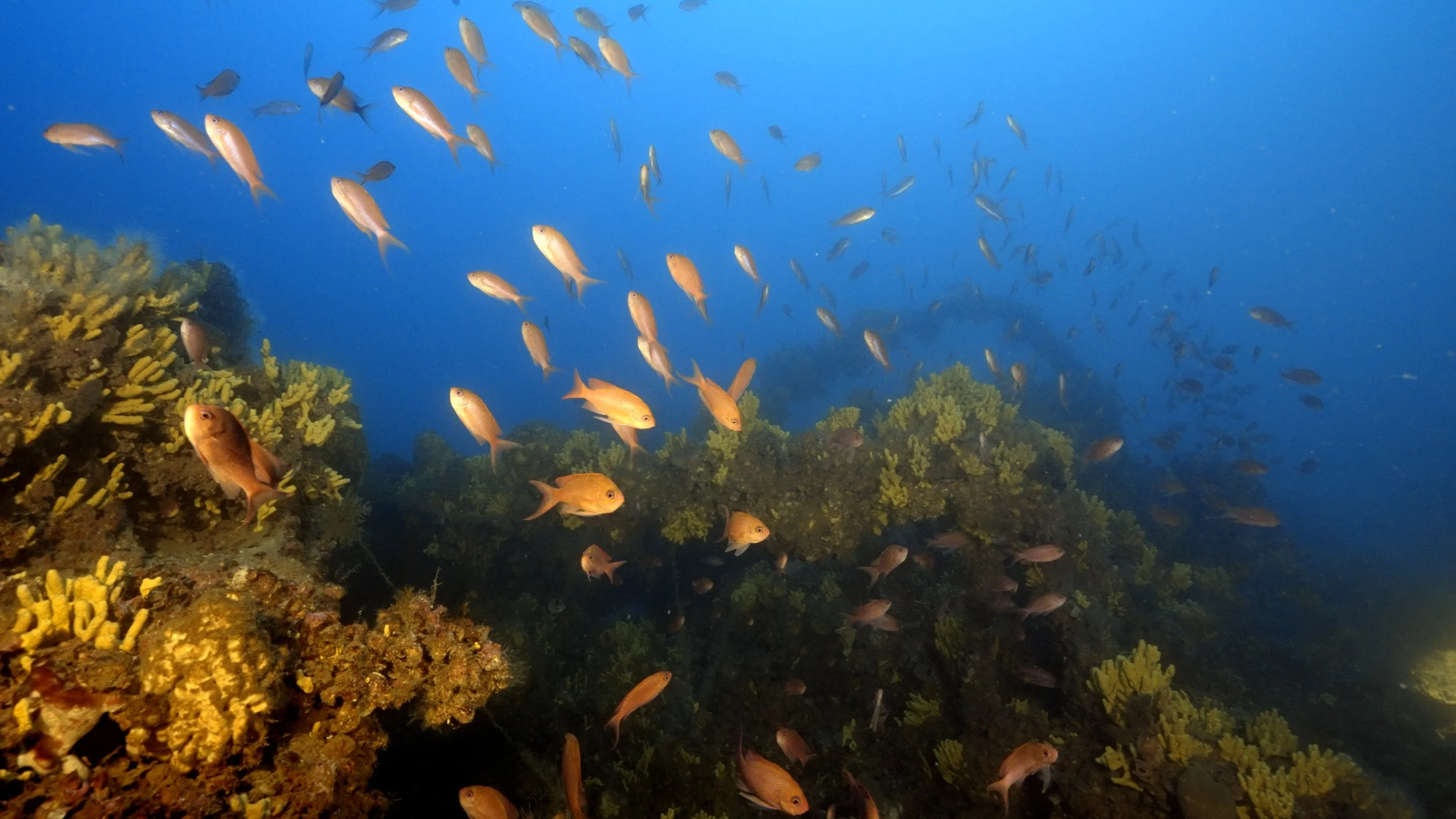
The seas rewarded my humility with perfect conditions for the Midilli, the once-shining star and loyal servant of the Ottoman Navy, who met her end in a British minefield in January, 1918. Of the wrecks we dived, Midilli looked least like a wreck. Covered in sponges - yellow, orange, red, and surrounded by schools of fish, she lays in the Aegan Sea in a high-flow area. This meant we had green water and perhaps eight metres of visibility. However, it was my day, and I managed to film the entire exterior of the wreck with my lights perfectly positioned, and recorded footage of scenes we could barely see with our eyes, while in complete control of all of my equipment and responsibilities. I was proud of myself at the end of that day.
The Ghosts of Gallipoli left me wanting to return; study, document, and dive. As these wrecks slowly but surely succumb to the forces of our oceans, they may not stand in memorial much longer, and the secrets they hold may be lost forever.