On a Mission for Healthy Seas
Red Sea, Egypt | Open Circuit | 3 - 12 metres | 2025 - present
From tourist beaches to virgin reefs: human impact runs rampant with irresponsible tourism and overconsumption.
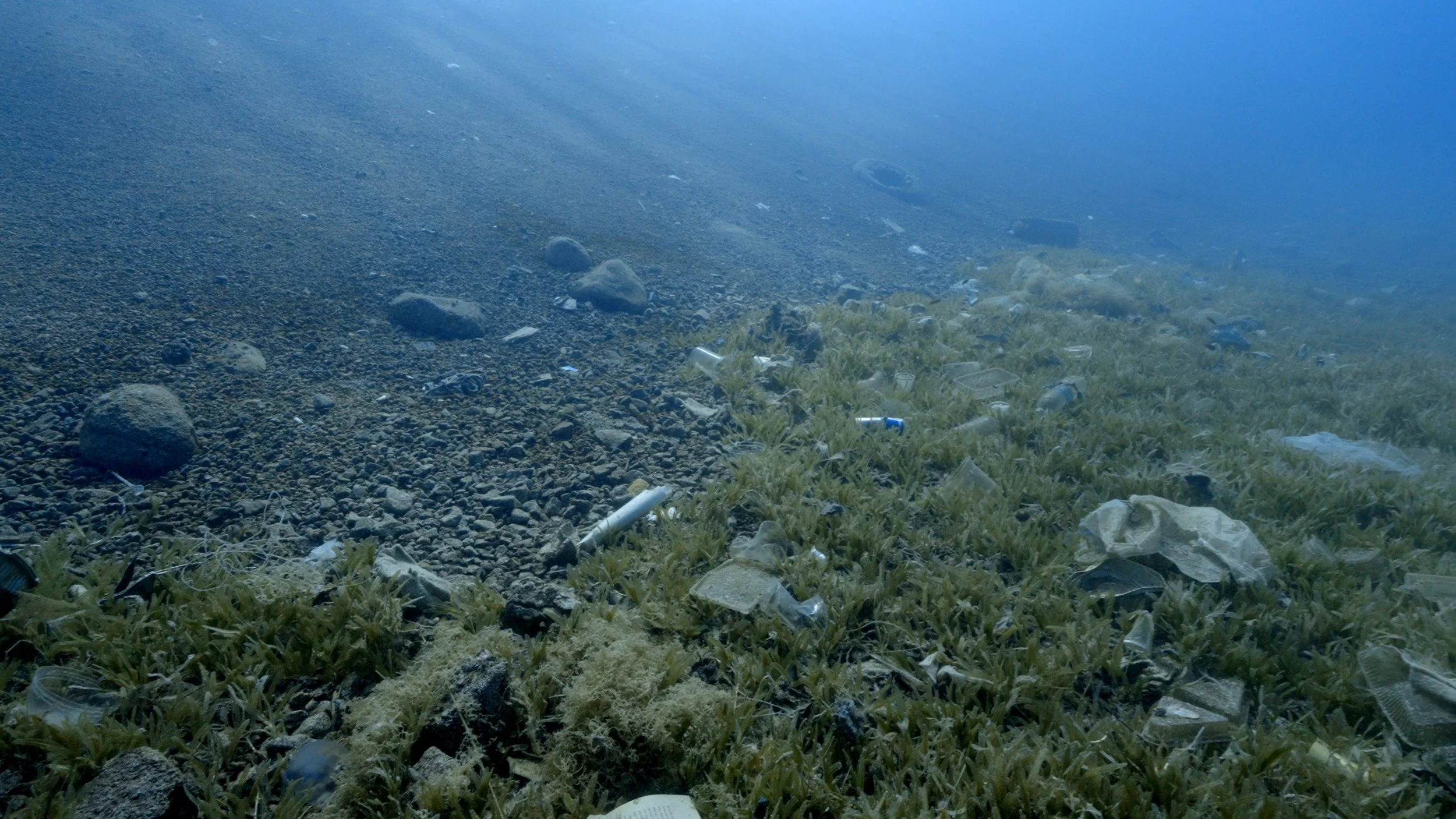
Under the pristine still turquoise waters of Lagoona Beach in Dahab, Egypt, lies destruction: layers upon layers of plastic bags, cups, and containers litter the seagrass, embedded in its roots, and layered in sand; built up over the years. A maze of fishing line extending 30, 40, 50 metres away from where it caught - overgrown by corals, and embedded around structures in the sand beneath. Pipefish surrounded by plastic cups; an eel that made a discarded diving crate its home, but that became its prison; reef fish fighting to survive as the plastic overwhelms the grass and outnumbers the corals.
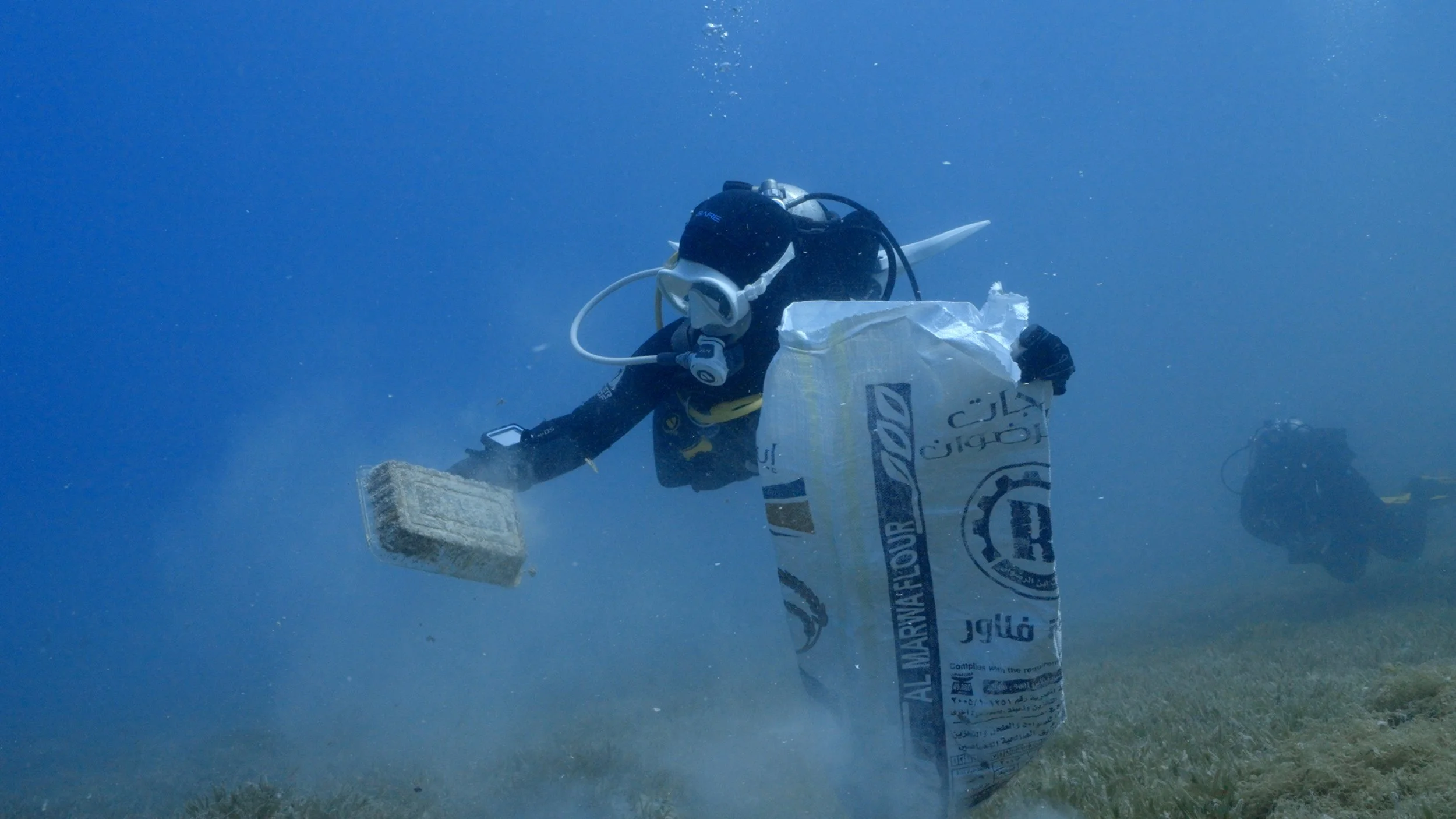
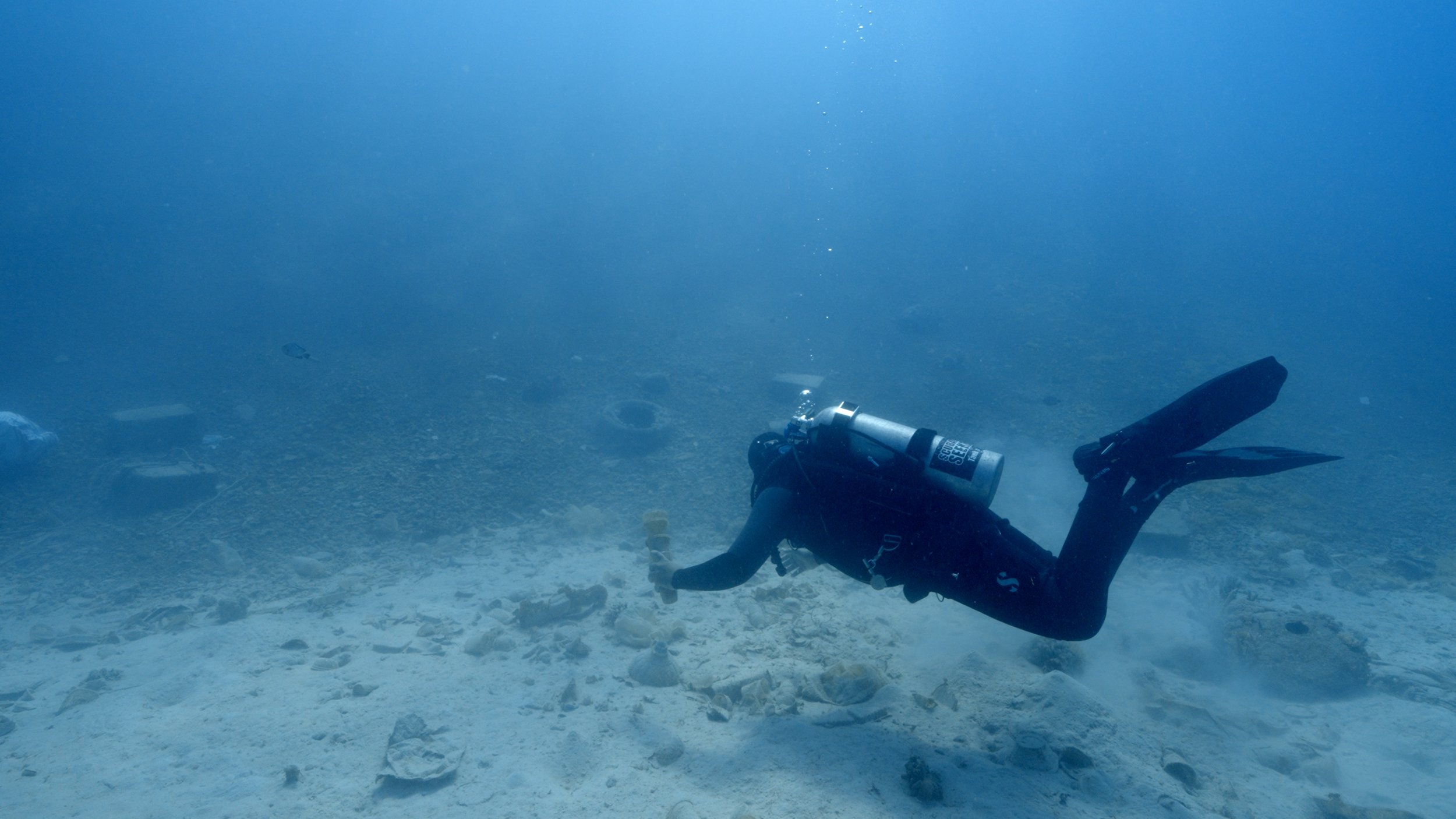
We cleaned up a section over numerous dives and many months, painstakingly removing hundreds of kilograms of single-use plastics from an environment suffocating in it. We were proud - what looked like a dumping ground when we started, finally resembled normalcy.
A tourist season later and the situation reverted. We were only doing what waste management did on land, underwater.
What we did, and do, mattered, certainly, and perhaps the beach-goers that watched us exit the water with numerous modified flour-bags full of the debris we carefully collected, will think twice before leaving their single-use plastics to fly into the ocean, or better yet, carry reusable bottles and utensils instead. To expect the minimum-wage workers, tasked with emptying waste-bins under the sweltering Egyptian sun, to walk around the beach and pick up after people, is unreasonable and unfair.
It is critical, for the sustainable consumption of petrochemicals, to preserve our marine environment, and for the health of our entire food chain that ultimately ends with us to tackle the source: the single-use plastic industry. Particularly when microplastics have been found in every fibre of our bodies.
I have learnt that, prior to the COVID-19 pandemic and the seemingly infinite number of masks, gloves, and single-use plastics of all types it required to curb the spread of the illness, Dahab was almost plastic-free. Its residence would carry tote bags with them for their shopping, and tourists would be charged for plastic bags, prompting them to carry their own. Disposable containers were rare.
The surge in single-use plastics after life, travel, and tourism crept back to “normal” levels, is responsible for the plastic that burdens the underwater realm at the shores of Lagoona Beach.
The other consequence of people making up for their two to three years of isolation, has been the increasing demand for seafood in Dahab. Dahab’s shores border a marine protected area, where only the indigenous population, or the Bedouin people, are permitted to fish for their own consumption. The growth of this town, the influx of businesses set up by outsiders, and the resulting reduction in both income and income potential for the local population, seems to have pushed some to fish not just for their own consumption, but to also sell their catch.
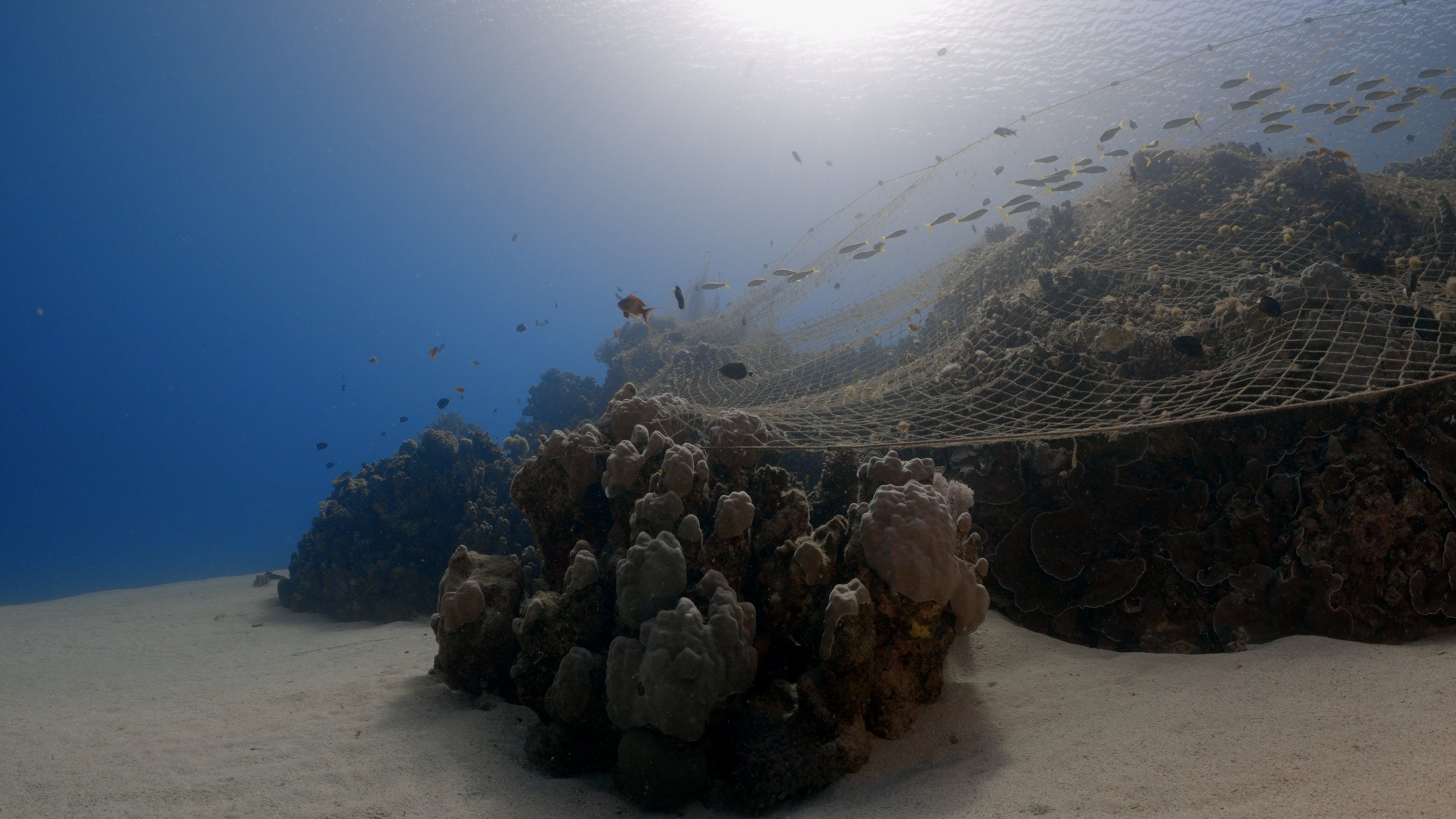
Fishing from the shore, reef flats, and small boats occasionally leads to ghost nets, as these nets are entangled on reef structures and are then abandoned, killing indiscriminately, attracting larger predators, and killing them too.
In early 2026, we received a call - there was a juvenile black tip shark and a juvenile manta ray trapped in a ghost net, further out in Lagoona. They had been predated upon by a larger animal - most likely, a larger shark, the cleaners of the ocean.
I have never seen a shark or a manta during my hundreds of hours underwater in Dahab. Ever. It made me wonder if the Gulf of Aqaba hosts predominantly small fish due to a lack of big, oceanic currents, or because everything else has simply been fished out.
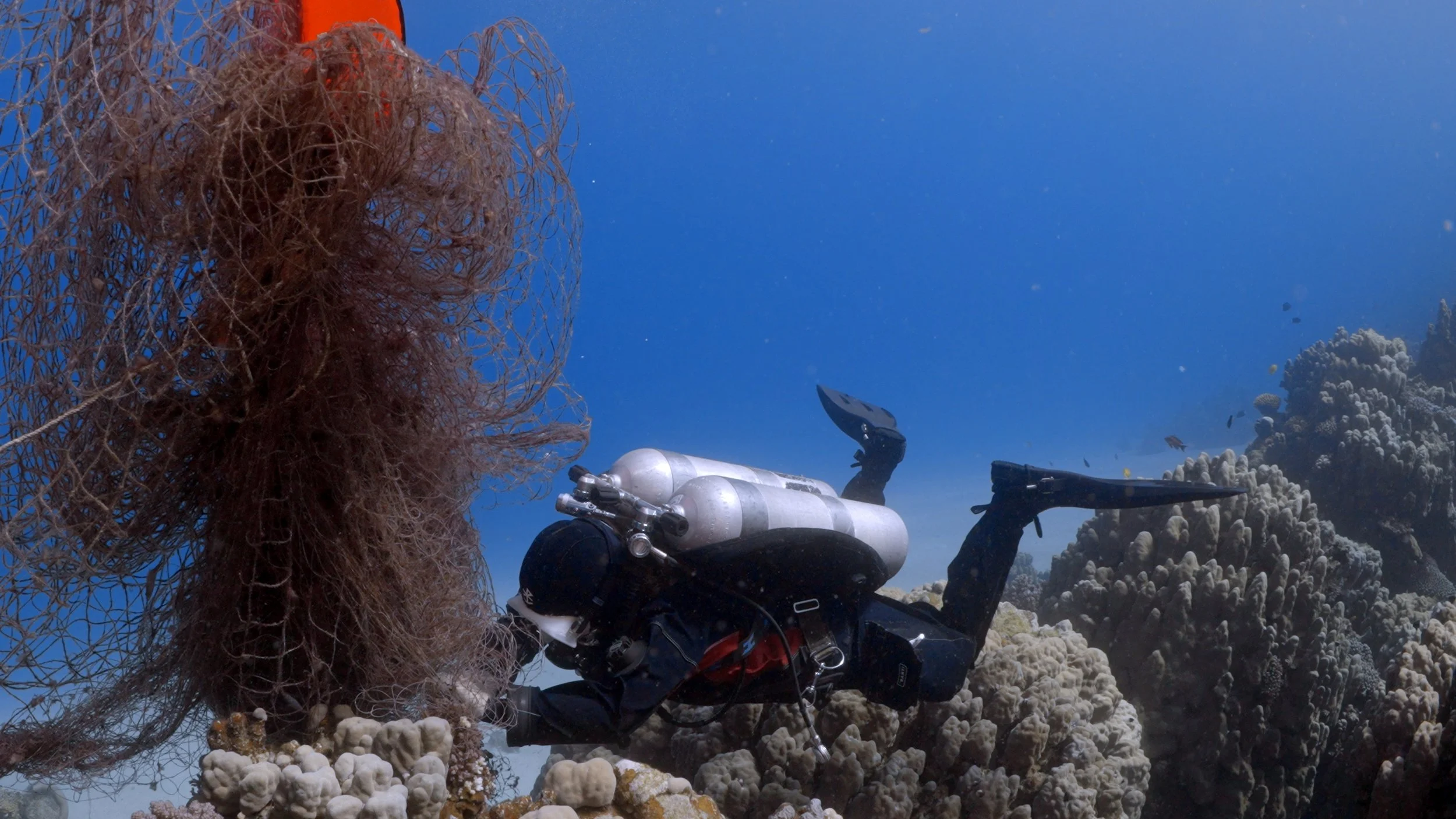
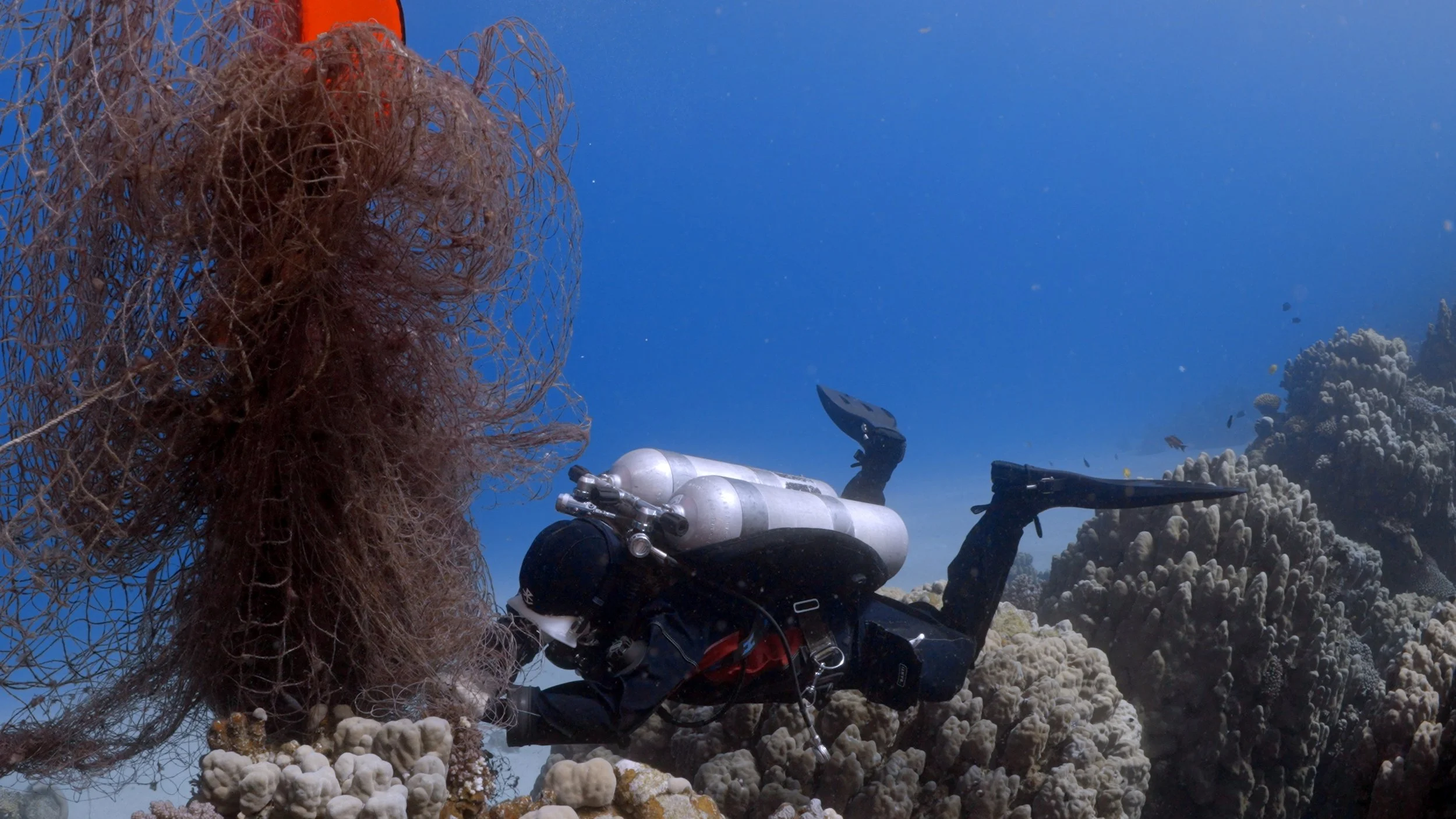
Barely two weeks after the Ghost Diving Egypt team removed that net (from which its victims had been consumed, entirely) we were alerted to a ghost net wrapped around a reef in an area divers don’t dive. We scouted it on snorkel and apnea, found the net, and planned our mission. The reef was pristine. Corals unlike any others I had seen across dive sites in Dahab; large, healthy, intact, diverse, and beautiful.
Thankfully, we found no death. The reef was still alive, and those that were trapped, were freed. It took us three hours of gently untangling and unhooking net from reef, tying away slack with re-usable zip ties, and finally, using lift bags to bring the 20+ kilogram load to the surface.
While the net wasn’t deep, three hours underwater requires more than a single-tank for most. Apart from gas consumption, redundancy is key, as we were working underwater. We had additional stages of spare gas if required, and, as we had to swim over a shallow reef flat to access the drop-off and net, we needed to compact the net into a large bag in order for it to not entangle us, or entangle the reef flat upon our exit. We wore drysuits; the water was 21-degrees and we were submerged for an extended period of time.
Upon our exit, we met a Bedouin man. “There are many more nets along this stretch” he said.
We are the last link in a long supply chain that causes both plastic and ghost nets to enter and devastate our oceans. The work that both professional divers and tourist divers do is valuable and important, but without links to community programs, incentives, policy changes, and tourist education, our efforts may be largely, and unfortunately fleeting. Project design with end-to-end engagement and advocacy and transparent impact measurement used to direct funding are key to its scale, and therefore its impact.